Lot's Wife Lookout atMount Sodom
This salt column on Mount Sodom at the south-western shore of the Dead Sea about 10 km south of Ein Bokek is traditionally thought to be Lot’s wife who was turned into a pillar of salt. Josephus already mentions viewing it, although it is unlikely that it was exactly the same column, as these columns are not permanent.
The two Israel travel books that everyone was waiting for!
Bestseller! "In and Around Jerusalem for Everyone - The Best Walks, Hikes and Outdoor Pools" and new! "The North of Israel for Everyone. The Best Family Activities, Hikes and Historic Sites" by Arnold Slyper — with essays, directions, maps, and much more.
For courier service from Pomeranz Booksellers in Jerusalem (tel: 02-623 5559) click here and here. For Amazon click here and here. For details about the books and their outstanding reviews click here and here.
Directions: Enter “Lot’s Wife” into Waze. There is parking in a designated area on the side of Route 90.
Public transport: There is no close bus stop.

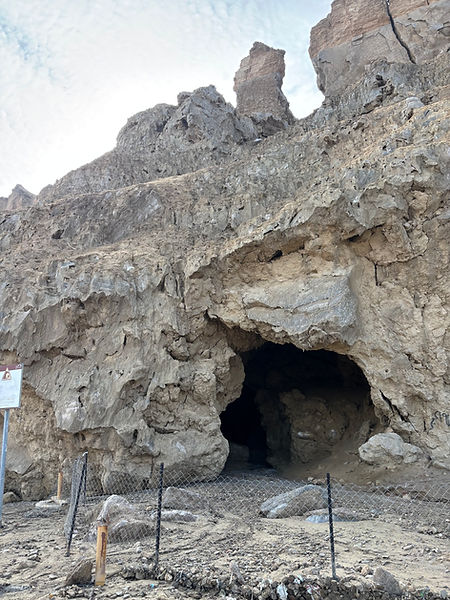
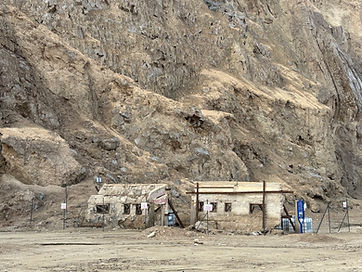
Huts for the quarry, also made of rockstone
The pillar and cave
The story is told in the Book of Genesis that Lot and his family were told not to look back when fleeing from Sodom: “Do not look behind you, nor stop anywhere in the plain.” (Gen. 19:17). Despite this, Lot’s wife looked back and she became a pillar of salt: “But his wife looked back from behind him, and she became a pillar of salt” (Gen. 19:26). Rashi quoting a midrash Bereshit Rabbah 50:4 explains that she had previously refused to give salt to guests in Sodom, which was an important feature of hospitality, and was therefore punished by becoming salt herself. Nachmanides (Ramban) points out that she disobeyed a prophetic command and remained spiritually attached to a corrupt society.
The exact location of Sodom and Gomorrah is not known and two locations have been proposed. The most favored is the southeast Dead Sea area on the Jordanian side, but also the northeastern Dead Sea has been considered. Salt pillars were doubtless known in the biblical period, and were probably thought to be a fitting reminder of her action.
The column, as is Mount Sodom itself, is made mainly of rock salt (the fancy name for which is halite). The erect column on the top of the mountain is formed from rainwater and wind erosion, in that the salt dissolves relatively rapidly, leaving pillar-like remnants.
Where did the salt come from? The Dead Sea Basin was intermittently covered with ocean water. Evaporation over millions of years produced mainly salt, but also gypsum, dolomite, limestone and chalk. The salt beds reached hundreds of meters thick. Salt behaves differently from normal rock in that when buried beneath denser sediments, it becomes buoyant and rises. Mount Sodom is a vertical or near-vertical body of salt that was forced upwards by overburden pressure and which pierced the overlying sediments.
The cave in front of you contains two impressive pillars. However, entry into the cave is not permitted because of the potential danger of collapse.